
Getting the Basics Right
Choosing the right diapering approach from the start can make your parenting journey smoother. Let’s break down the essentials:
Cloth vs. Disposable: What’s Best for Your Lifestyle?
There’s no one size fits all option both cloth and disposable diapers come with their own pros and cons.
Cloth Diapers
Environmentally friendlier and reusable
Cost effective in the long term
Requires laundry and more time investment
Disposable Diapers
Convenient and quick, especially on the go
More absorbent and reliable for overnight use
Adds to household waste and can be more costly over time
Ask Yourself:
Do you have time (and space) to clean cloth diapers?
Are convenience and portability top priorities?
Would a hybrid approach work cloth at home, disposables when traveling?
Sizing: When to Move Up
Diaper sizes are typically based on your baby’s weight and age but keep an eye out for tell tale signs that it’s time to size up:
General Guidelines
Newborn: up to 10 lbs
Size 1: 8 14 lbs
Size 2: 12 18 lbs
Size 3: 16 28 lbs
Signs It’s Time to Go Bigger
Red marks around baby’s legs or waist
Frequent leaks or blowouts
Diaper feels overly tight even when dry
Don’t rely solely on the weight range babies grow fast, and comfort counts.
Must Have Changing Station Supplies
Setting up an efficient diapering area saves time and stress with every change.
Essentials to Keep Within Reach:
Diapers in the right size
Unscented, alcohol free wipes
Diaper cream or ointment
Waterproof changing pad or mat
A change of clothes (because messes happen!)
Diaper disposal system or trash bin
Pro Tip: Keep a storage basket stocked and portable for quick changes in different parts of the house. Consistency and accessibility make all the difference.
Mastering the Diaper Change
Changing a diaper doesn’t need to feel like a wrestling match. With a tight routine and smart setup, it becomes automatic even if your baby has other plans.
Step by Step: Quick and Clean
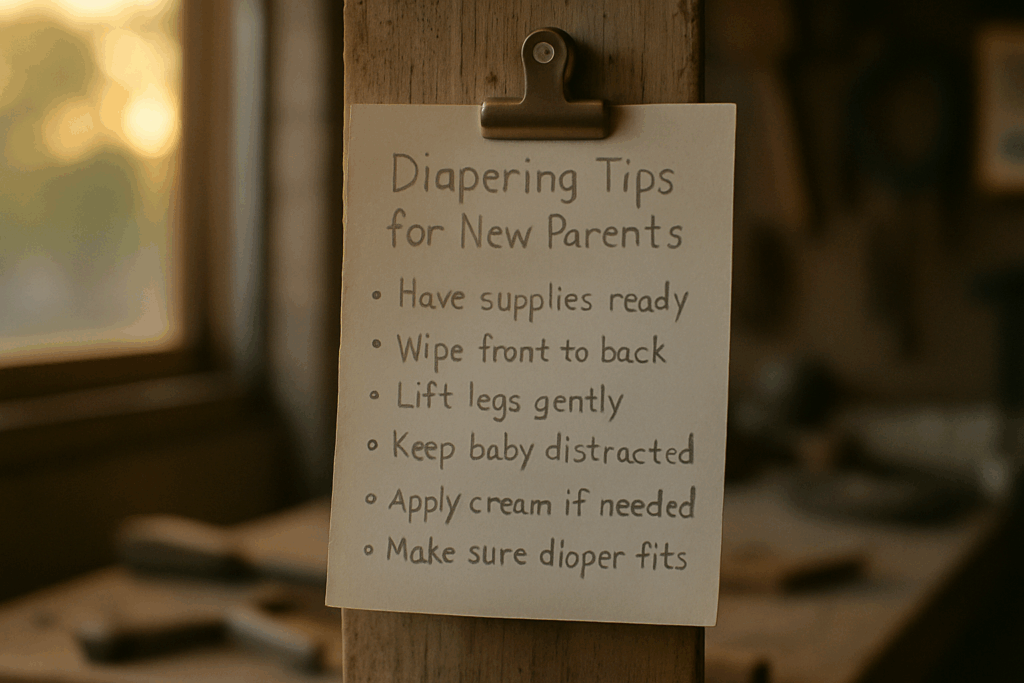
- Prep Ahead Have diapers, wipes, cream, and a change of clothes within arm’s reach.
- Lay Baby Down Use a clean, flat surface. Strap them in if you’re on a changing table.
- Open, Wipe, Replace Unfasten the diaper, wipe front to back, fold up the mess, and get it out of the way fast.
- Slide in the Fresh One Before you remove the old diaper, slide the new one partway under. This turns your swap into a smooth move.
- Secure Snugly Tabs should be tight but not digging in. Double check the leg cuffs aren’t tucked.
Preventing Messes and Mayhem
Leaks happen when the fit’s wrong or the change comes too late. Check sizes regularly and don’t wait for blowouts as your reminder. If you’re getting soaked surprises, try going up a size even if the weight chart says “not yet.”
For boys, aim the sprinkler south. For girls, make sure to wipe gently but thoroughly in all creases. Use diaper cream as a barrier if they’re prone to irritation; it helps with cleanup too.
Dealing with the Wiggle Monster
Squirmy babies are normal. Keep one hand on them at all times. A distraction can help think soft toys, a clean wipe to crinkle, or a silly song on loop. Speed matters, but so does control. If needed, rotate their upper body gently while you work below. One foot crossed over the other can reduce kicking.
The more you stay calm and efficient, the less your baby reacts diaper changes don’t need drama. Just stay ready, stay focused, and have a backup outfit on standby.
Avoiding Rashes and Irritation
A healthy diaper routine starts with what touches your baby’s skin. Choose diapers and wipes labeled hypoallergenic and fragrance free. These tend to be gentler and less likely to cause irritation. If your baby’s skin gets red often, consider testing different brands what works for one baby might not work for another.
Diaper cream isn’t just for treating rashes it’s a solid defense move. Apply a thin layer at the first sign of redness, or even proactively during long stretches between changes (like naps or overnight). Think of it as a barrier that keeps moisture and friction from doing damage.
Every so often, give your baby’s bottom a break. A few minutes of diaper free time each day can help skin stay dry and heal faster. Lay them on a towel or waterproof pad and let the air do its thing. No creams, no diapers just time to reset. It doesn’t have to be long, but done regularly, it can make a big difference.
Sleep Time Diaper Hacks
Sleep and diapering go hand in hand, especially in the first few months when nighttime changes can disrupt everyone’s rest. Knowing how to manage your baby’s diaper overnight can make a noticeable difference in how much (and how well) the whole family sleeps.
Overnight Diapers vs. Double Diapering
Choosing the right sleep time diaper solution depends on your baby’s needs and your personal routine:
Overnight diapers are specially designed with extra layers to provide enhanced absorbency for up to 12 hours.
Double diapering putting one diaper over another is occasionally used, but it can cause bulkiness and discomfort. It’s rarely recommended unless you’re dealing with frequent leaks and a very heavy wetter.
Tip: Always size up at night if the diaper seems full in the morning. A too tight fit can lead to leaks and discomfort.
Limiting Nighttime Disruptions
Every unnecessary diaper change overnight can unsettle your baby’s sleep. To minimize waking them up:
Change diapers right before the final bedtime feed.
Use low lighting to avoid stimulating your baby too much.
Avoid waking your baby for a change unless the diaper is heavily soiled or leaking.
Keep supplies organized on a nearby tray or caddy for quiet, efficient changes if needed.
Pro Strategy: Try a lotion barrier or cream during the final change to protect skin through the night without needing reapplication.
Why Absorbency Matters More Than You Think
High absorbency isn’t just about fewer changes it also protects your baby’s delicate skin and promotes better, uninterrupted sleep:
A diaper that locks in moisture reduces the risk of irritation or overnight rashes.
Babies who sleep for longer stretches thanks to dryness tend to wake up happier and more rested.
Avoid the trial and error cycle by researching and testing a few trusted brands until you find one that performs well for overnight use. The peace of mind is worth it.
Diapering on the Go
Leaving the house with your baby can feel like a military operation but a well packed diaper bag makes the difference between stress and sanity. Preparation is key, especially when you’re far from your changing table. Here’s how to make every outing easier.
Diaper Bag Must Haves
Make sure your diaper bag is stocked with more than just diapers. A fully equipped bag keeps you ready for any situation:
Diapers (at least one for every two hours you plan to be out)
Wipes (preferably fragrance free and gentle on skin)
Portable changing pad
Diaper cream for rash prevention
Extra outfit (or two spit up and blowouts happen)
Plastic bags or wet/dry pouch for dirty clothes or used diapers
Hand sanitizer for quick cleanups
Pacifier or teether if needed
Light blanket for comfort or privacy during feedings
Public Changing Table Hygiene Tips
Changing your baby in public doesn’t have to be a germ nightmare if you follow a few simple rules:
Always use a changing pad or disposable liner (never place baby directly on the surface)
Wipe down the area before and after use with sanitizing wipes if possible
Keep your baby’s hands away from the surface offer a toy, bottle, or pacifier to occupy them
Clean your hands thoroughly with hand sanitizer afterwards, especially if soap and water aren’t available
Preparing for the Unexpected
Diaper disasters don’t follow a schedule. Whether it’s an exploding diaper or an unexpectedly long errand, being prepared puts you ahead:
Pack more diapers and clothes than you think you’ll need
Choose a bag with multiple compartments to stay organized
Keep a spare diaper kit (with diapers, wipes, a change of clothes) in your car or stroller for emergencies
With the right gear and a little foresight, on the go diapering becomes manageable maybe even stress free.
Common Mistakes New Parents Make
New parents often get tripped up by well meaning habits gone sideways. Overchanging or underchanging are common missteps both can cause problems. Change too often, and you’re stripping natural oils and possibly irritating baby’s skin. Wait too long and you’ll face rashes, discomfort, and some truly gnarly diaper blowouts. There’s no one magic number, but a good rhythm is every 2 3 hours during the day, and whenever there’s a bowel movement.
Wipe fatigue is real and sneaky. When you’re changing diapers constantly, reaching for whatever wipe is closest becomes automatic. But many babies react to heavily fragranced or alcohol based wipes. If your baby’s skin looks red, splotchy, or irritated, try switching to fragrance free, water based options. Your arms may be tired, but your baby’s skin will thank you.
Lastly, fit matters more than people think. Diapers that are too tight can chafe and cause friction rashes. Diapers that are too loose? Blowouts and leaks. Keep an eye out for red marks around the waist or thighs signs things might be too snug. And if skin irritation won’t quit, don’t rule out a material sensitivity or even a mild allergic reaction. Sometimes, the smallest change can make a big difference.
Setting Up for Success at Home
Newborns don’t care about convenience. You’ll change them in the nursery, the living room, the bathroom wherever makes the most sense in the moment. So set yourself up with well stocked diaper zones in at least two rooms. You don’t need full stations everywhere, but mini kits with diapers, wipes, cream, and a changing pad can make life smoother.
Also, think like a surgeon: organize supplies for one handed access. You’ll often be using one hand to hold your baby steady while grabbing wipes or fastening tabs with the other. Stash bins, drawer organizers, even wall mounted caddies whatever keeps essentials within reach and chaos to a minimum.
Trust this setup it turns daily chaos into something close to manageable. And for more on baby proof home strategy, check out these baby’s first home tips.
When to Ask Your Pediatrician
Not all redness is a red flag. A little pinkness around the diaper area especially if your baby’s skin is fair or sensitive is normal. It usually clears up with more frequent changes and a good barrier cream. But if the redness spreads, looks angry or raw, or sticks around longer than a couple of days, it’s time to pay closer attention.
Watch for signs of infection: raised bumps or blisters, a fever, or skin that oozes or cracks open. These aren’t typical diaper rash symptoms and you shouldn’t wait to see if they’ll go away on their own. Call your pediatrician. The same goes if you’ve been diligent with care and creams, and the rash hasn’t improved in three days.
Finally, if something just feels off even if you can’t point to a textbook symptom trust your gut. As a parent, your instincts matter. You know your baby better than anyone else. If you sense it’s more than just a routine rash, it’s worth checking in with the doctor.